

12/18/12

12/17/12
Study sketches
based on illustrations by Dana Gardner from Alexander Skutch's "A Guide to the Birds of Costa Rica". Rufous-tailed hummingbird, Royal flycatcher, Ocellated ant bird.


12/11/12
Dr. Alexander F. Skutch

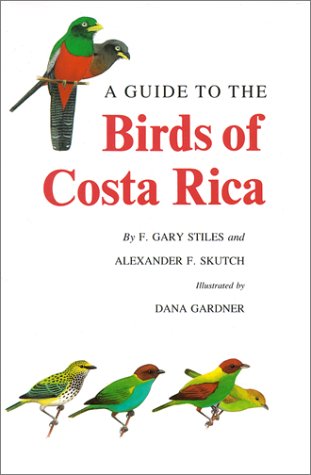
My amazing friend Alex Epstein, owner of Nudashank Gallery, just offered me the incredible opportunity to help her with a show she is curating at the Park School that will feature past students who went on to do great things. I am especially excited because she wants me to do two paintings of birds based on the illustrations by Dana Gardner that compliment the writing of Park School alumnus Dr. Alexander F. Skutch in his Guide to Birds of Costa Rica. Dr. Skutch was a botanist by training (at Johns Hopkins), an ornithologist by passion, and a writer and philosopher who lived in Costa Rica for the majority of his long life. He funded his extensive tropical bird studies by collecting and selling plant specimens because he "never wanted to shoot birds and make bird specimens" - from an interview by Richard Garrigues. He wrote hundreds of papers and 40 books about birds and a few about philosophy. He died just a few days before his 100th birthday, May 12, 2004 at his home in Costa Rica.
12/9/12
Weather and Migration
How does the weather affect migration?
Weather is one of the chief external influences on migration. Cool air masses moving south in the fall can trigger migratory flight. Cool air brings high pressure, low or falling temperatures and winds moving in the direction of flight and clear skies. If the cool air meets warmer air, clouds, precipitation and fog may result. Fog, especially, causes birds to descend to the ground and cease migration. Sudden changes in the weather can be disastrous for birds. In the spring, a warm, moist mass of air (low pressure with higher or rising temperatures) moving north over the Gulf of Mexico can start a wave of migrating birds to move northward from the American Tropics or southern United States. A southward moving cold front meeting such a warm air mass can result in heavy rains and high winds. This can stop migration immediately or within 24 hours. These spring "fallouts" or "groundings" of migrants may occur when the migrating birds literally fall into sheltered areas seeking food and refuge. This can be disastrous if the migrants are forced down into the ocean drowning thousands of birds. Resumption of southerly winds and rising temperatures starts migration northward again.
-from Gulf Coast Bird Observatory www.gcbo.org
12/7/12

Migration Facts
Just a few of the amazing reasons I am enthralled by migration (from "Secrets of Animal Navigation" by Michael E. Long, National Geographic June 1991):
Recent researchers, using techniques of the neurosciences, microbiology, and bioacoustics and such fundamentals of physics as electricity and magnetism, are demonstrating that the senses of the creatures of land, sea, and air are incredibly acute. Imagine:
• A homing pigeon senses changes in altitude as minute as four millimeters. Pigeons also see ultraviolet light and hear extremely low-frequency sound that emanates from wind coursing over ocean surf and mountain ranges thousands of miles distant.
• A honeybee detects infinitesimal fluctuations of the earth’s magnetic field that only the most sensitive magnetometers can measure.
• A shark recognizes an electric field on the order of five-billionths of a volt per centimeter.
• Some animals may be able to “see” the earth’s magnetic field, a proposition about as staggering as “seeing” the force of gravity.
In 1975 Richard Blakemore discovered "north-seeking bacteria" that responded to a battery of magnetic tests - even dead bacteria aligned themselves appropriately!
On vacation in Utah, scientist Arthur Hasler led his family to a favorite waterfall of his boyhood. “As we approached, the waterfall was hidden by a cliff,” he recalls. “Suddenly I experienced the wonderful fragrance of mosses and columbines growing near it that I had not smelled since I was a boy. The names of my school chums whom I had not seen for 20 years flashed back. And then it occurred to me: Maybe a salmon does this!” In fact, salmon remember the smell of the rivers they traveled down, their home stream, and the genetic pheromones of their kin.
But the sensory detection that scientists have discovered still don't explain how animals navigate longitudinally - which means, possibly, there is a type of sensory input that animals have that scientists have yet to imagine!
Migration's "larger purpose" draws admiration from humans
Animal Migrations article by David Quammen, photographs Joel Sartore, citing research by Dr. Hugh Dingle.
 Pronghorn funnel through a 150-ft space between a new housing development and a steel knoll on their way between winter grounds in Green River Basin, WY and summer grounds in Grand Teton NP. Rattlesnakes dodge farm and road vehicles migrating between high winter dens and low prey-filled plains of Alberta. Sandhill cranes miraculously travel from winter grounds in West Texas, around the east and northern sides of the Rockies, through Alaska, over the Bering Strait, into their summer grounds in East Russia!

Direct communication
I just found this amazing project by the Center for Biological Diversity, an organization that sheds light on conservation issues: Endangered Species Condoms.
 With beautiful illustrations by artist Roger Peet, the condom packages encourage people to think about human overpopulation and its effect on the global environment, with information about the depicted species included. Genius!

Subscribe to:
Posts (Atom)