

12/18/12

12/17/12
Study sketches
based on illustrations by Dana Gardner from Alexander Skutch's "A Guide to the Birds of Costa Rica". Rufous-tailed hummingbird, Royal flycatcher, Ocellated ant bird.


12/11/12
Dr. Alexander F. Skutch
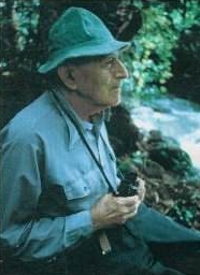
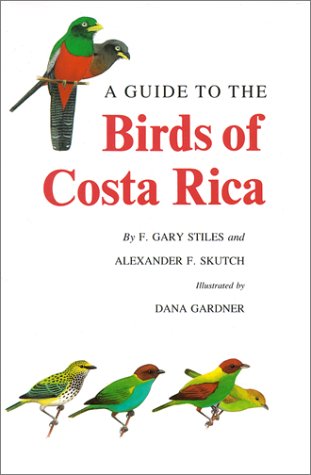
My amazing friend Alex Epstein, owner of Nudashank Gallery, just offered me the incredible opportunity to help her with a show she is curating at the Park School that will feature past students who went on to do great things. I am especially excited because she wants me to do two paintings of birds based on the illustrations by Dana Gardner that compliment the writing of Park School alumnus Dr. Alexander F. Skutch in his Guide to Birds of Costa Rica. Dr. Skutch was a botanist by training (at Johns Hopkins), an ornithologist by passion, and a writer and philosopher who lived in Costa Rica for the majority of his long life. He funded his extensive tropical bird studies by collecting and selling plant specimens because he "never wanted to shoot birds and make bird specimens" - from an interview by Richard Garrigues. He wrote hundreds of papers and 40 books about birds and a few about philosophy. He died just a few days before his 100th birthday, May 12, 2004 at his home in Costa Rica.
12/9/12
Weather and Migration
How does the weather affect migration?
Weather is one of the chief external influences on migration. Cool air masses moving south in the fall can trigger migratory flight. Cool air brings high pressure, low or falling temperatures and winds moving in the direction of flight and clear skies. If the cool air meets warmer air, clouds, precipitation and fog may result. Fog, especially, causes birds to descend to the ground and cease migration. Sudden changes in the weather can be disastrous for birds. In the spring, a warm, moist mass of air (low pressure with higher or rising temperatures) moving north over the Gulf of Mexico can start a wave of migrating birds to move northward from the American Tropics or southern United States. A southward moving cold front meeting such a warm air mass can result in heavy rains and high winds. This can stop migration immediately or within 24 hours. These spring "fallouts" or "groundings" of migrants may occur when the migrating birds literally fall into sheltered areas seeking food and refuge. This can be disastrous if the migrants are forced down into the ocean drowning thousands of birds. Resumption of southerly winds and rising temperatures starts migration northward again.
-from Gulf Coast Bird Observatory www.gcbo.org
12/7/12

Migration Facts
Just a few of the amazing reasons I am enthralled by migration (from "Secrets of Animal Navigation" by Michael E. Long, National Geographic June 1991):
Recent researchers, using techniques of the neurosciences, microbiology, and bioacoustics and such fundamentals of physics as electricity and magnetism, are demonstrating that the senses of the creatures of land, sea, and air are incredibly acute. Imagine:
• A homing pigeon senses changes in altitude as minute as four millimeters. Pigeons also see ultraviolet light and hear extremely low-frequency sound that emanates from wind coursing over ocean surf and mountain ranges thousands of miles distant.
• A honeybee detects infinitesimal fluctuations of the earth’s magnetic field that only the most sensitive magnetometers can measure.
• A shark recognizes an electric field on the order of five-billionths of a volt per centimeter.
• Some animals may be able to “see” the earth’s magnetic field, a proposition about as staggering as “seeing” the force of gravity.
In 1975 Richard Blakemore discovered "north-seeking bacteria" that responded to a battery of magnetic tests - even dead bacteria aligned themselves appropriately!
On vacation in Utah, scientist Arthur Hasler led his family to a favorite waterfall of his boyhood. “As we approached, the waterfall was hidden by a cliff,” he recalls. “Suddenly I experienced the wonderful fragrance of mosses and columbines growing near it that I had not smelled since I was a boy. The names of my school chums whom I had not seen for 20 years flashed back. And then it occurred to me: Maybe a salmon does this!” In fact, salmon remember the smell of the rivers they traveled down, their home stream, and the genetic pheromones of their kin.
But the sensory detection that scientists have discovered still don't explain how animals navigate longitudinally - which means, possibly, there is a type of sensory input that animals have that scientists have yet to imagine!
Migration's "larger purpose" draws admiration from humans
Animal Migrations article by David Quammen, photographs Joel Sartore, citing research by Dr. Hugh Dingle.
 Pronghorn funnel through a 150-ft space between a new housing development and a steel knoll on their way between winter grounds in Green River Basin, WY and summer grounds in Grand Teton NP. Rattlesnakes dodge farm and road vehicles migrating between high winter dens and low prey-filled plains of Alberta. Sandhill cranes miraculously travel from winter grounds in West Texas, around the east and northern sides of the Rockies, through Alaska, over the Bering Strait, into their summer grounds in East Russia!

Direct communication
I just found this amazing project by the Center for Biological Diversity, an organization that sheds light on conservation issues: Endangered Species Condoms.
 With beautiful illustrations by artist Roger Peet, the condom packages encourage people to think about human overpopulation and its effect on the global environment, with information about the depicted species included. Genius!

10/11/12
Zugunruhe
I was looking at the hawk mountain website and learned an amazing new word: zugunruhe
Its a compound german word, they always seem to describe ideas better than english words, that means move-anxiety.
In the northeastern United States, birds of prey migrate south from July through January. Decreasing day length in late summer induces zugunruhe, or migratory restlessness in raptors.
According to the wikipediea, scientists seem to think its an endocrine-induced instinct. And caged migrants exhibit zugunruhe behavior for the number of days that correspond with the length of their normal migration. I wonder if we are still feeling its impact as individuals descended from migratory ancestors. Maybe that's why people tend to feel like some vacations can be "too short" or "too long".
6/12/12
Flexing my sketching muscles - its been a while

fox with mange

mouse trapped itself in the trashcan at work

botanica familiar
6/2/12
The everflowing now
When I was a child, I lived in the heart of the cold, sterile, franchise-faced heart of suburbia, outside D.C. But my saving grace, that I thank my parent for often, was the small drainage creek and half acre of trees that was the unofficial continuation of our backyard.
Once I passed the divide between grass mowed by my brother once a week and leaf-litter shaded by 40 year old trees, there were no more rules, coercive or tangible, to where my feet could take me. I could race through saplings and fallen logs down to the creek, or I could take my time, stopping to overturn rock homes of salamanders and roly-poly troglodytes, taking in the scent of decay and arboreal breath, and half-mindedly dodging the leaves-of-three.
The creek slithered past the homes of unacquainted neighbors, whose backsides were barely discernible beyond the broad leaves of summer, but jarringly apparent in the bareness of winter. Because no one "owned" the creek, kids and dog owners were free to follow its poison-ivy-flanked curves, interrupted briefly by graffiti-laced culverts and urine-yellow bubbly gatherings of water-herded trash.
Sometimes the creek split into trickling tributaries, tumbling between cliffs that towered above my three-and-a-half-foot-tall stature. Visiting them now, I wonder at my childish awe of these slight slopes, amazed that they once seemed like mountain sides, treacherous to climb, my small hands grasping brittle roots and feet slipping on loose rocks in Piedmont clay, aiding erosion's transformation of a tiny patch of wilderness in the ever-hungry belly of suburbia.
It was a swath of respite from the bucolic isolation, from the sterility of dry wall and vacuumed carpet, from the unrecognizable faces of elderly neighbors, from look-both-ways and don't-talk-to-strangers. When I was on the shores of that tiny creek, didn't fear the motivation of bees, robins, or flowers. I could travel in any direction I wanted. Instead of up and down the sidewalk, I could travel up and down trees on branches that, looking at them now - even though we both have grown - could doubtfully hold my weight.
This freedom of movement is hard to find in my adult life. I flirt with it by using a bike to get around the city. Going the wrong way down one-way streets, breaching the street-sidewalk divide with a small nerve-jolting jump, blasting past a line of cars through a red light - these are little victories against the bland oppression of civilization. I'm so accustomed to bending these rules that when I do find myself behind a steering wheel, I can reach alarming levels of frustration a little too quickly. The vein-popping rage of suburban commuters is quite familiar to me. Of course, that empathy disintegrates the moment this rage is direct at me and my bicycle.
It is the constriction of decisions and actions in my adult life that make me feel trapped and stressed out. Manufacturers capitalize on this frustration by filling supermarket shelves with plentiful choices: 50 kinds of pre-bottled salad dressing, 65 brands of sliced white bread, several variations of shapes of red flesh protected from contamination and recognition by Styrofoam and plastic wrap.
But instead of relief, I scan the daunting shelves with terror. I run silent-screaming past carts full of frozen dinners and 12-packs, past robotic cashiers, past cascades of stale air that protect the shopping environment from the dynamic weather of the parking lot. I know my plight is laughable, diagnosable, and hardly life-threatening, but I wish I was brave enough to actually scream on my way out.
One night, a friend revealed to me her use of the German-to-English thesaurus as a divining device. Ask a question while opening to a random page, put your finger down on a word without looking, and it will answer, however cryptically and subject to your own interpretation. Being generally skeptical of divination and hippy-dippy intuition, I asked it a few half-hearted, impersonal questions. The answers were surprisingly curt. "It knows you aren't taking it seriously," my friend said. So I asked it something I have spent many years contemplating: "What will happen if I abandon art?" The word my finger landed on, the German of which eludes my memory, translated to "labyrinth of rules and regulations."
I try not to allow divination practices to influence my decisions, as that is where (I believe) their power lies. But I can't stop thinking about that labyrinth. I've been courting the idea of going to school for biology, in hopes that the potential field work will allow me the opportunity to walk into a wood without following a state-funded or memorial path. Researchers are often granted access to places untrodden by tourists' Tevas.
But what if its a fantasy? What if, in order to be granted this access, I have to jump through endless legislative and departmental hoops, negating any idealized "explorer" aspirations I selfishly harbor? What if I get so lost in the paperwork of scientific exploration I forget my compass of artistic skepticism?
Is there any escape, or is this just adulthood in an era of over-populated human history? Am I being a brat, trying to resurrect my childhood self as a compass for the occupation of my adult life? Should I stop philosophizing and just choose? The choice is murder of all the possible lives. But not choosing is equally murderous, rendering my life a series of mindless service industry jobs.
Once I passed the divide between grass mowed by my brother once a week and leaf-litter shaded by 40 year old trees, there were no more rules, coercive or tangible, to where my feet could take me. I could race through saplings and fallen logs down to the creek, or I could take my time, stopping to overturn rock homes of salamanders and roly-poly troglodytes, taking in the scent of decay and arboreal breath, and half-mindedly dodging the leaves-of-three.
The creek slithered past the homes of unacquainted neighbors, whose backsides were barely discernible beyond the broad leaves of summer, but jarringly apparent in the bareness of winter. Because no one "owned" the creek, kids and dog owners were free to follow its poison-ivy-flanked curves, interrupted briefly by graffiti-laced culverts and urine-yellow bubbly gatherings of water-herded trash.
Sometimes the creek split into trickling tributaries, tumbling between cliffs that towered above my three-and-a-half-foot-tall stature. Visiting them now, I wonder at my childish awe of these slight slopes, amazed that they once seemed like mountain sides, treacherous to climb, my small hands grasping brittle roots and feet slipping on loose rocks in Piedmont clay, aiding erosion's transformation of a tiny patch of wilderness in the ever-hungry belly of suburbia.
It was a swath of respite from the bucolic isolation, from the sterility of dry wall and vacuumed carpet, from the unrecognizable faces of elderly neighbors, from look-both-ways and don't-talk-to-strangers. When I was on the shores of that tiny creek, didn't fear the motivation of bees, robins, or flowers. I could travel in any direction I wanted. Instead of up and down the sidewalk, I could travel up and down trees on branches that, looking at them now - even though we both have grown - could doubtfully hold my weight.
This freedom of movement is hard to find in my adult life. I flirt with it by using a bike to get around the city. Going the wrong way down one-way streets, breaching the street-sidewalk divide with a small nerve-jolting jump, blasting past a line of cars through a red light - these are little victories against the bland oppression of civilization. I'm so accustomed to bending these rules that when I do find myself behind a steering wheel, I can reach alarming levels of frustration a little too quickly. The vein-popping rage of suburban commuters is quite familiar to me. Of course, that empathy disintegrates the moment this rage is direct at me and my bicycle.
It is the constriction of decisions and actions in my adult life that make me feel trapped and stressed out. Manufacturers capitalize on this frustration by filling supermarket shelves with plentiful choices: 50 kinds of pre-bottled salad dressing, 65 brands of sliced white bread, several variations of shapes of red flesh protected from contamination and recognition by Styrofoam and plastic wrap.
But instead of relief, I scan the daunting shelves with terror. I run silent-screaming past carts full of frozen dinners and 12-packs, past robotic cashiers, past cascades of stale air that protect the shopping environment from the dynamic weather of the parking lot. I know my plight is laughable, diagnosable, and hardly life-threatening, but I wish I was brave enough to actually scream on my way out.
One night, a friend revealed to me her use of the German-to-English thesaurus as a divining device. Ask a question while opening to a random page, put your finger down on a word without looking, and it will answer, however cryptically and subject to your own interpretation. Being generally skeptical of divination and hippy-dippy intuition, I asked it a few half-hearted, impersonal questions. The answers were surprisingly curt. "It knows you aren't taking it seriously," my friend said. So I asked it something I have spent many years contemplating: "What will happen if I abandon art?" The word my finger landed on, the German of which eludes my memory, translated to "labyrinth of rules and regulations."
I try not to allow divination practices to influence my decisions, as that is where (I believe) their power lies. But I can't stop thinking about that labyrinth. I've been courting the idea of going to school for biology, in hopes that the potential field work will allow me the opportunity to walk into a wood without following a state-funded or memorial path. Researchers are often granted access to places untrodden by tourists' Tevas.
But what if its a fantasy? What if, in order to be granted this access, I have to jump through endless legislative and departmental hoops, negating any idealized "explorer" aspirations I selfishly harbor? What if I get so lost in the paperwork of scientific exploration I forget my compass of artistic skepticism?
Is there any escape, or is this just adulthood in an era of over-populated human history? Am I being a brat, trying to resurrect my childhood self as a compass for the occupation of my adult life? Should I stop philosophizing and just choose? The choice is murder of all the possible lives. But not choosing is equally murderous, rendering my life a series of mindless service industry jobs.
Exploration on a budget
How often do I explore? How often do my footsteps create their own path, unguided by sidewalks, stairs, or hallways? Even when I take the time to wander a nearby wood, my way is directed by the paths made by others, in order to diminish the effects of my weight on the life processes of the wood's inhabitants.
There have been times in my life when I was afraid to leave my home. Not a concrete fear of violence or oppression, just a dull anxiety that keeps me cooped. Curiously, those times tend to correlate with the weeks after moving to a new place. Perhaps I need the time to explore and feel comfortable in my new home before I can even think of exploring its surroundings. But at the time, I never think of it that way. I think "What's wrong with me? Am I depressed? Am I developing agoraphobia?" I hear about events across town, think about how many people I will have to encounter, not just there but en route. I tell myself to stop being such a baby and I but on my coat and boots, then continue pacing around finding little activities to delay my departure. Even when the environment inside my home becomes a cacophonous soup of practicing musicians, grinding power tools, and room mates laughing around the kitchen table, to the point where I need to escape more than ever, I imagine myself trapped. Instead of walking downstairs and out the door, I jump under a blanket and try to drown out the noise with darkness.
Is it because I know that by walking outside, I will be replacing one striated cacophony with another? Escaping an overly amplified performance to an avenue of sirens, honking, shouting, and helicopter wings. Escaping the geometrical restraint of indoor architecture full of someone else's stuff into the grid of pavement, brick, and regulation. Either place I go, my path is predetermined.
For years, art has been my realm of exploration. The mind is substantially striated by culture, tradition, and genetics, but the act of art-making can allow one to break out of the grid, if only for brief moments.
But the inner realm can become its own prison. when after hours in a studio, I suddenly look up and realize there is a whole world outside.
So what do I do?
Read.
I read about the explorations of others. I watch nature documentaries. Like the suburbanite I was raised as, I pretend to satisfy my exploratory desire by staying comfortably at home and consuming endless packaged goods of ideas. Why don't I just take some trail mix to bed and watch a Lewis and Clarke documentary. Just like the bookstore owner in Neverending Story suggests - "Those books are safe." When I finish pretending I am Craig Childs standing face to face with a mountain lion, I get to be a little girl again.
Then the truest fear grips me - the one that causes middle aged men to buy convertibles. What if I die having never walked without a trail or a map or a goal in mind. What if my last breath is wind on the pages of a book about animals, instead of commingling with the scents of them. What if I die having only read and made art about the creatures I admire so much without having ever experienced them outside the frames of page edges, aquariums, or fences, and without having made any true effort to aid their survival in the midst of certain obliteration by the progress of my species. No one will care if I die like that.
When that fear sweeps over me like the arctic wind I have never felt on my fur-lined cheeks, that is the moment I walk out the door.
There have been times in my life when I was afraid to leave my home. Not a concrete fear of violence or oppression, just a dull anxiety that keeps me cooped. Curiously, those times tend to correlate with the weeks after moving to a new place. Perhaps I need the time to explore and feel comfortable in my new home before I can even think of exploring its surroundings. But at the time, I never think of it that way. I think "What's wrong with me? Am I depressed? Am I developing agoraphobia?" I hear about events across town, think about how many people I will have to encounter, not just there but en route. I tell myself to stop being such a baby and I but on my coat and boots, then continue pacing around finding little activities to delay my departure. Even when the environment inside my home becomes a cacophonous soup of practicing musicians, grinding power tools, and room mates laughing around the kitchen table, to the point where I need to escape more than ever, I imagine myself trapped. Instead of walking downstairs and out the door, I jump under a blanket and try to drown out the noise with darkness.
Is it because I know that by walking outside, I will be replacing one striated cacophony with another? Escaping an overly amplified performance to an avenue of sirens, honking, shouting, and helicopter wings. Escaping the geometrical restraint of indoor architecture full of someone else's stuff into the grid of pavement, brick, and regulation. Either place I go, my path is predetermined.
For years, art has been my realm of exploration. The mind is substantially striated by culture, tradition, and genetics, but the act of art-making can allow one to break out of the grid, if only for brief moments.
But the inner realm can become its own prison. when after hours in a studio, I suddenly look up and realize there is a whole world outside.
So what do I do?
Read.
I read about the explorations of others. I watch nature documentaries. Like the suburbanite I was raised as, I pretend to satisfy my exploratory desire by staying comfortably at home and consuming endless packaged goods of ideas. Why don't I just take some trail mix to bed and watch a Lewis and Clarke documentary. Just like the bookstore owner in Neverending Story suggests - "Those books are safe." When I finish pretending I am Craig Childs standing face to face with a mountain lion, I get to be a little girl again.
Then the truest fear grips me - the one that causes middle aged men to buy convertibles. What if I die having never walked without a trail or a map or a goal in mind. What if my last breath is wind on the pages of a book about animals, instead of commingling with the scents of them. What if I die having only read and made art about the creatures I admire so much without having ever experienced them outside the frames of page edges, aquariums, or fences, and without having made any true effort to aid their survival in the midst of certain obliteration by the progress of my species. No one will care if I die like that.
When that fear sweeps over me like the arctic wind I have never felt on my fur-lined cheeks, that is the moment I walk out the door.
5/23/12
The Disappointment of Zoos


Hawk, a limited edition screen print I made for my friend Nelly.
It is an exploration of the post-industrial human experience of the animal, and this particular animal's post-industrial existence.
For many humans in 'Western' culture, animals appear only in highly mediated forms: as storybook characters, in human-built structures like zoos and nature centers, or the photographic medium of nature documentary.
The animals that are experienced in 'unmediated' ways are mostly the species which have evolved to exist and thrive alongside humans, and therefore are absorbed into our cultural landscape rather than representing the 'out there' of nature. For example, when hiking, a person might hear a rustle in the woods and look to see what it is, but the eyes flicker past almost without pause - "It's just a squirrel".
When we see an animal that we associate with 'out there' - the 'wilderness' - in the confines of a man-made structure, it appears barely lucid, lazy, boring, kind of sad. It lacks that wild spark of our expectations bolstered by Animal Planet. The wild animal's life is, in fact, a continuum of stasis punctuated by dramatic life-or-death situations when a predator must eat, or territories are invaded.
When these situations are removed, what is left? A lifestyle a little too familiar to us humans. A day-in-day-out languid existance, mediated by walls, schedules, explanations by experts. It is disappointing because these particular 'others' are too much like 'us'. The 'freedom' that wild animals represent to humans could also be described as the experience of the near-death, or actual-death.
I volunteer at a Nature Center that provides permanent care for injured birds of prey such as hawks, owls, vultures, even a bald eagle. When I look at these birds, historically described as magnificent, intrepid creatures, perfectly design with the weapons they need to attack and kill prey, what I (and the visitors to the center) see are disabled versions, dependent on much-less-intrepid humans for their sustenance - which mainly consists of barely thawed lab rats - and confined to stark rectangular boxes devoid of sunlight. (They are let out for a few hours every day). As a human, I can't help but relate to them from an anthropocentric perspective, albeit via empathy. I can't help but compare their existence to what I know (also as an outsider) of prisons.
So what is the point of keeping these birds alive in these conditions? Why not 'let nature take its course' (a phrase I would like to dissect in another piece)? For educational purposes? It would be like taking an alien to an inpatient ward of a hospital and saying "Look! Here are humans! This is what we are like!"
The reasonable approach to avoiding this paradox might be the same approach we have to dealing with our own mediated lives: make unbearably exciting, dramatic, easily digestable versions in the form of movies and television shows. We have decided this is the most idealized way to relate to our own lives, so it must be fore animals. If you find the zoo disappointing, watch more Animal Planet.
What is the "true", unmediated experience between human and nonhuman animals? If Nature no longer exists, due to human's global imperialism, how can this experience occur? It is tempting to think the only way to experience the wild animal is by NOT experiencing it - by letting it live free of intervention. But like early anthropologists, who studied tribal cultures with furvor knowing they would soon be gobbled up by industrialization, we are in a race to experience wild life before it is gone forever. The globe is being rapidly transformed by human actions, to not intervene is to doom.
Maybe the truest experience most of us can hope for is the most familiar one - the bond between humans and their pets.
Reading Material: "Why Look at Animals" by John Berger, and "Encounters with Nature: Essays" by Paul Shepard.
Subscribe to:
Posts (Atom)